TL;DR: Furnace repair in Corona typically costs $150 to $900, depending on what failed. A simple igniter swap runs $150-$300. Gas valves and control boards land in the $300-$700 range. A blower motor replacement is usually the most expensive single repair at $450-$900 or more. Diagnostic fees run $75-$150 and often apply toward the repair if you move forward. The real cost driver isn’t the brand of furnace, it’s which part broke and how old the unit is.
If your furnace just stopped firing, is clicking repeatedly without lighting, or is blowing cold air through the vents on a chilly Corona morning, you’re probably looking at a part-level repair rather than a full replacement. Most no-heat calls in this area trace back to one of five components: the igniter, the flame sensor, the gas valve, the blower motor, or the control board. Here’s what each one actually costs to fix and how to tell when repair stops making financial sense.
What does furnace repair cost in Corona, CA?
Most furnace repairs in Corona run between $150 and $700, with the full range stretching from about $150 for a minor part swap to $900+ for a major component like a blower motor. The price depends almost entirely on which part failed, not on the furnace’s brand or your home’s square footage.
Older homes near Corona’s Circle City downtown and Main Street corridor often have furnaces installed when the home was built, sometimes 15 to 20 years ago, so repairs there tend to run toward the higher end simply because the parts are harder to source. Newer construction out toward Eagle Glen and South Corona usually has furnaces under 10 years old, where common fixes like an igniter or flame sensor are quick and inexpensive.
A written quote before any work starts should name the specific part, the labor time, and whether the diagnostic fee rolls into the total. If a technician can’t tell you which part is bad before quoting a price, ask them to run the diagnostic first.
How much does a furnace igniter replacement cost?
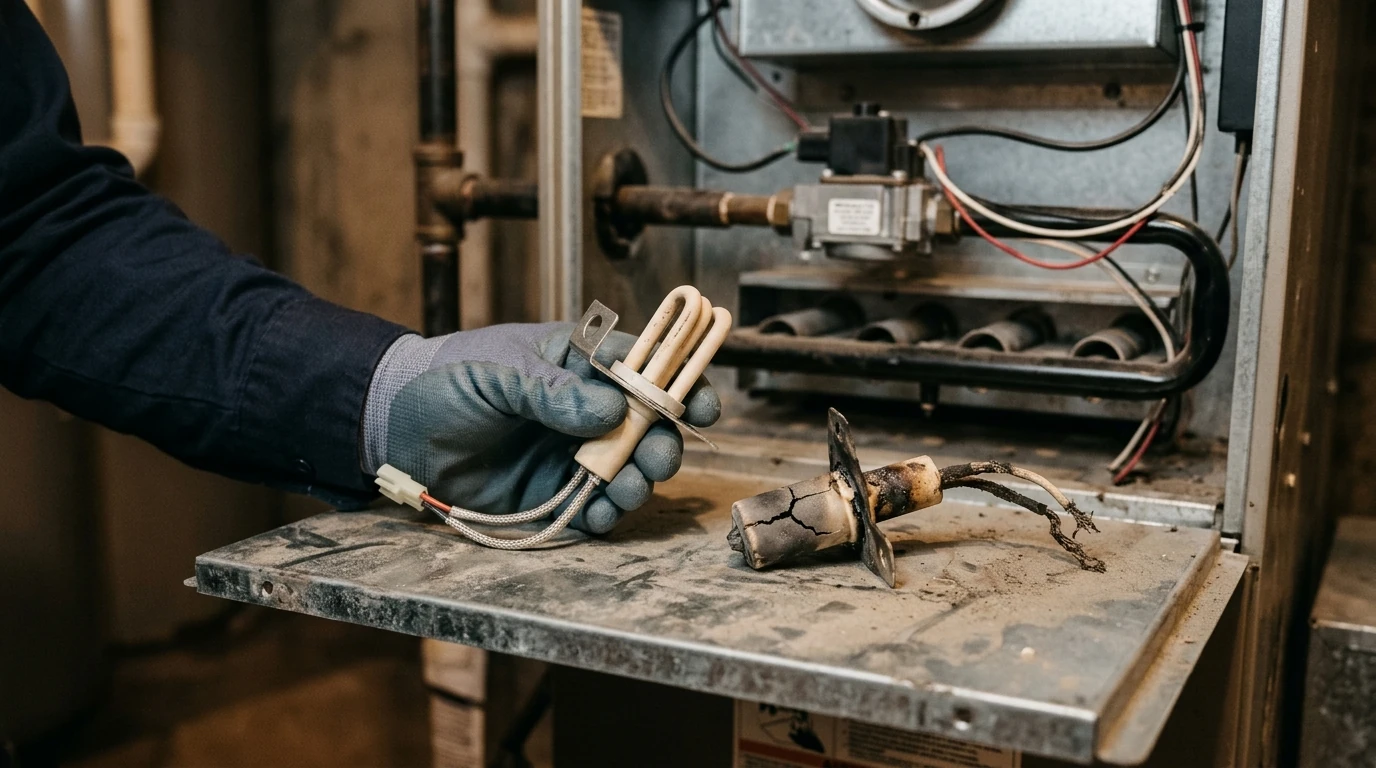
A hot surface igniter replacement typically costs $150 to $300 total, including the part and labor. The igniter itself is inexpensive, usually $20 to $75, but it’s a precision ceramic or silicon carbide component that’s easy to crack if handled wrong, which is why most homeowners have it swapped rather than DIY it.
Igniters are the single most common reason a gas furnace won’t light. You’ll usually see the igniter glow briefly, then the furnace shuts down and tries again a few minutes later. If that cycle repeats, the igniter is cracked or has lost resistance and needs replacing, not cleaning.
A related and cheaper fix is a dirty flame sensor, which can mimic igniter failure. Cleaning or replacing a flame sensor usually runs $75 to $200 and should be one of the first things a technician checks during the diagnostic.
How much does a furnace gas valve replacement cost?
A gas valve replacement typically costs $300 to $600, including the part and labor, since the valve itself runs $100 to $300 and the job requires a pressure and leak test afterward. Gas valves fail less often than igniters but are more expensive to replace because they control fuel flow directly and have to be set and tested precisely.
If you ever smell gas (a rotten-egg odor) near your furnace, leave the house immediately. Don’t flip any light switches or create a spark. Call 911 or your gas utility’s emergency line from outside the home. Only after the utility confirms the scene is safe should you call a licensed plumber or HVAC technician for the repair or a pressure test. A gas valve issue is never a same-day DIY fix, and it should never be the first call during an active leak.
How much does a furnace blower motor replacement cost?
A blower motor replacement typically costs $450 to $900, making it one of the pricier single-component furnace repairs. Standard PSC blower motors run toward the lower end of that range, while variable-speed ECM motors, common in furnaces installed in the last 10-15 years for efficiency, can push costs to $700-$1,200 because the motor and its control module are more complex and more expensive to source.
A failing blower motor usually shows up as weak airflow, a burning smell, or a furnace that fires but never pushes warm air through the vents. Bearings wearing out produce a grinding or squealing noise before the motor fails outright, which is a good early warning sign worth having checked before it leaves you without heat.
What does a furnace diagnostic fee cover?
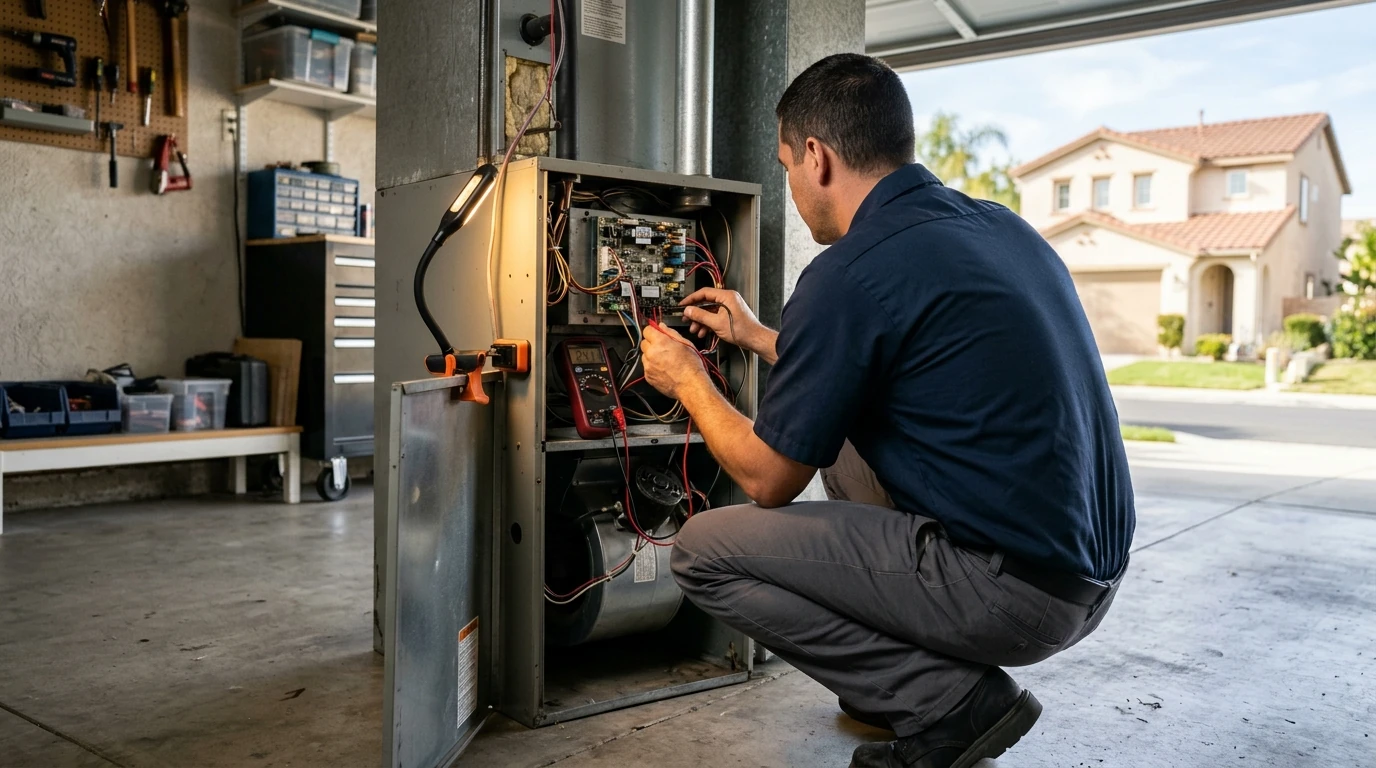
A furnace diagnostic fee typically runs $75 to $150 and covers a technician’s time to test the igniter, flame sensor, gas valve, control board, and blower circuit to identify the actual failure point. Most companies apply this fee toward the repair cost if you move forward with the work that same visit.
Skipping the diagnostic and guessing at the part is how homeowners end up paying twice, once for a part that wasn’t actually the problem and again for the real fix. Ask upfront whether the diagnostic fee is a standalone charge or whether it’s credited against repair costs.
When is a furnace repair not worth it?
A furnace repair generally stops being worth it when the quoted repair cost is more than half the price of a new furnace, or when the unit is past 15-18 years old and already has one major component failure on record. A $700 control board repair on a 17-year-old furnace is a different decision than the same repair on a 6-year-old unit.
Age matters because furnaces built before the mid-2000s often run well below the efficiency of today’s ENERGY STAR certified furnaces, so a replacement can lower monthly utility bills in addition to ending the repair cycle. For the full breakdown of the math, including the 50% rule plumbing and HVAC companies use to make this call, see our furnace repair or replace guide.
If your furnace is cycling through repeated repairs in the same season, or if a technician flags a cracked heat exchanger, replacement is almost always the right call regardless of the unit’s age.
A technician can usually tell you within the diagnostic visit which category your furnace falls into. Request a furnace repair quote and ask for the age and condition assessment alongside the repair price, so you’re deciding with full information rather than guessing at what comes next.
About RT Olson Plumbing, Heating and Air Conditioning
RT Olson Plumbing, Heating and Air Conditioning has served Corona, CA and the surrounding Inland Empire and North Orange County communities since 2014, with offices in Corona and Anaheim. The company holds California contractor license #997337, searchable through the CSLB license lookup tool, and offers 24/7 availability for plumbing, heating, and air conditioning calls. RT Olson carries a 4.9 average rating across 623 Google reviews from customers across the service area.
Need help now? Call RT Olson Plumbing, Heating and Air Conditioning at (951) 344-5596.
Video Transcript
Is your furnace clicking but never lighting on a cold Corona morning? Let’s break down what these repairs actually cost today. Most furnace repairs here run between $150 and $900, and the price depends on which part failed, not the brand. A cracked igniter is the most common culprit, and swapping it typically costs $150 to $300 for parts and labor. A dirty flame sensor can mimic igniter failure too, and cleaning or replacing it usually runs just $75 to $200. Gas valve repairs cost more, around $300 to $600, since technicians must test for leaks and precise pressure afterward. If you ever smell gas, leave the house immediately and call your utility’s emergency line before calling for repairs. Blower motor replacement is the priciest single repair, running $450 to $900, sometimes more for efficient variable-speed models. A diagnostic visit costs $75 to $150, and most contractors apply that fee toward your repair if you move forward. Once your furnace passes 15 to 18 years old with a major failure, replacement often makes more financial sense than repair. Get a written quote before any work begins. Call RT Olson Plumbing, Heating and Air Conditioning at (951) 344-5596 to schedule an assessment.