
TL;DR: Water heater repair cost in Corona depends on which part failed, not a flat number. A thermocouple or igniter swap is a quick fix with inexpensive parts. A gas control valve or heating element replacement costs more because of the part price and the labor time to isolate and test it. Tankless units add descaling and flame-rod work tied to Corona’s hard groundwater. Every repair starts with a diagnostic visit that tells you whether fixing the unit still makes sense or a new water heater is the smarter spend.
If your water heater is popping, rumbling, or barely warming the water right now, you want two answers fast: what’s broken, and what it costs to fix. The honest answer is that “water heater repair cost” isn’t one number. A pilot assembly out near Dos Lagos costs a different repair than a corroded gas control valve in an older Eagle Glen ranch home, and Corona’s hard groundwater changes the math again for tankless units. Here’s what actually drives the price on each common repair, so you know what you’re paying for before a technician shows up.
What does a water heater repair visit in Corona typically involve?
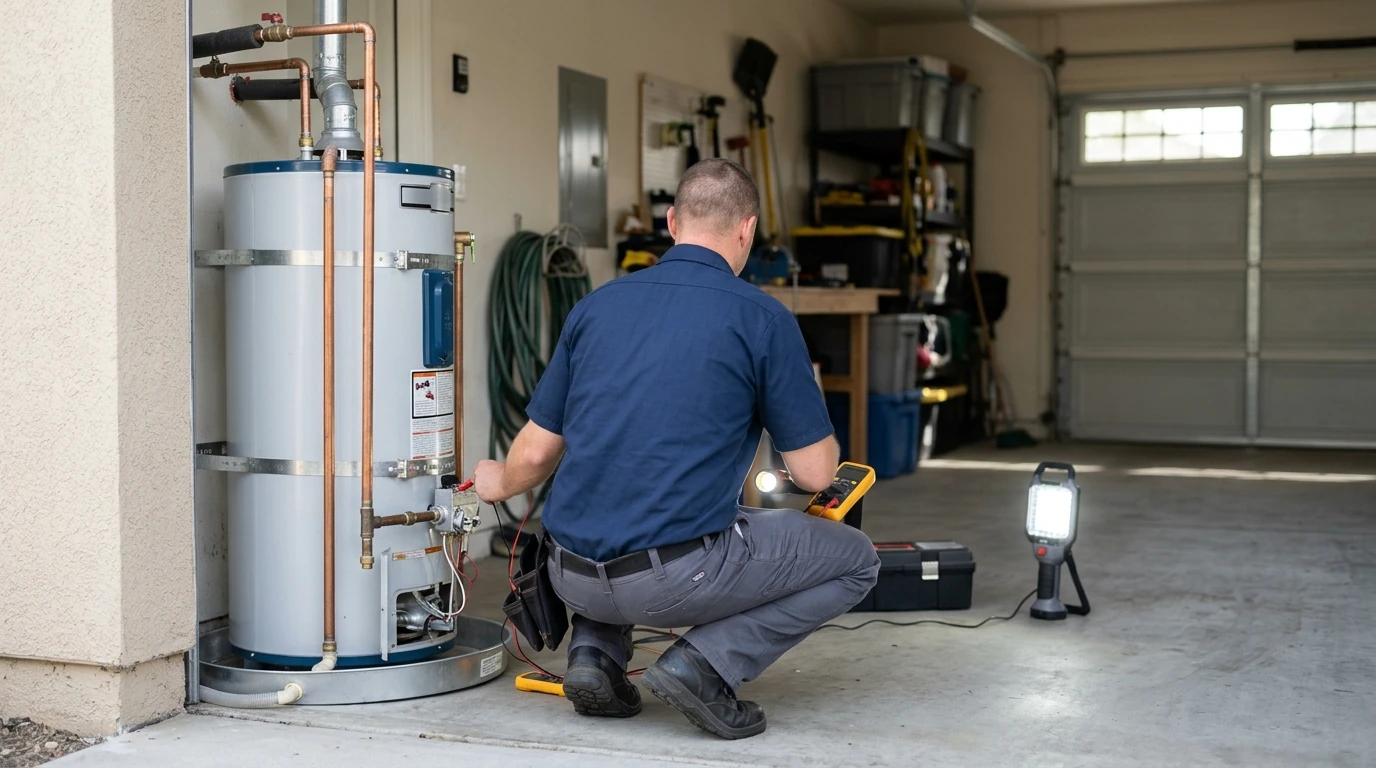
A standard repair visit starts with a diagnostic check of the unit, not a guess. A technician tests the thermostat, checks for a lit and stable pilot or a firing igniter, reads the anode rod and tank condition if it’s accessible, and confirms the gas or electrical supply is doing its job before touching a single part.
That diagnostic step matters more in Corona than in a lot of markets. Groundwater here runs hard, and scale buildup inside a tank or a tankless heat exchanger can mimic a failed part, a bad thermostat, or a dying heating element, when the real fix is a flush. Skipping the diagnostic and swapping parts on a guess wastes money. RT Olson Plumbing, Heating and Air Conditioning runs that diagnostic on every water heater repair call before recommending a part.
What drives the cost of a thermocouple or pilot assembly replacement?
A thermocouple or pilot assembly replacement is usually the least expensive gas water heater repair, because the part itself is inexpensive and the labor is straightforward once the burner compartment is open. This is the classic “pilot won’t stay lit” repair.
The cost driver here is less about the part and more about access and age. On a tank that’s 10+ years old, corrosion around the burner assembly or a brittle gas orifice can turn a 20-minute job into a longer one. If you’re seeing this symptom on a unit that’s already near the end of its expected service life, it’s worth reading through how long water heaters actually last before paying for the part.
What drives the cost of a gas control valve replacement?
A gas control valve replacement costs more than a thermocouple swap because the valve itself is a pricier part and the job demands more care: shutting off and relighting gas safely, testing for leaks at every connection, and confirming manifold pressure once the new valve is in. This is not a part a homeowner should attempt without a licensed technician.
If you ever smell gas near your water heater, leave the house immediately. Don’t flip light switches or create any spark. Call 911 or your gas utility’s 24-hour emergency line from outside, and wait until they confirm the scene is safe. Only after that should you call a licensed plumber to repair the line or replace the valve. A gas control valve replacement is a repair job, not an emergency response to an active leak, and it should only happen once the gas company has signed off.
What drives the cost of a heating element and thermostat replacement on an electric water heater?
On an electric water heater, a heating element or thermostat replacement costs more when both the upper and lower elements need to come out, since each one requires draining the tank partway and testing resistance with a multimeter before and after. A single thermostat swap, by comparison, is a faster job.
Sediment buildup is the usual culprit behind a burned-out lower element, and it’s a pattern we see often in Corona and across the Inland Empire because of hardness in the municipal and well-fed water supply. If your water heater has been making popping or rumbling noises, that’s sediment insulating the element and making it work harder than it should, which shortens its life.
What drives the cost of a T&P relief valve replacement?
A T&P (temperature and pressure) relief valve replacement is one of the more affordable repairs on this list, because the part is simple and the labor is quick, but it’s also one of the least negotiable. The T&P valve is the safety device that releases pressure before a tank can become dangerous, and most plumbing codes referenced by IAPMO require it to be present and functioning on every installed tank.
A T&P valve that’s dripping constantly, rather than occasionally, usually means thermal expansion pressure in a closed system, not a bad valve. If a technician replaces the valve and it starts dripping again within days, the real fix is often an expansion tank, which is a separate, small add-on part, not a sign the new valve is defective.
What does tankless water heater repair cost (descaling, flame rod, igniter)?
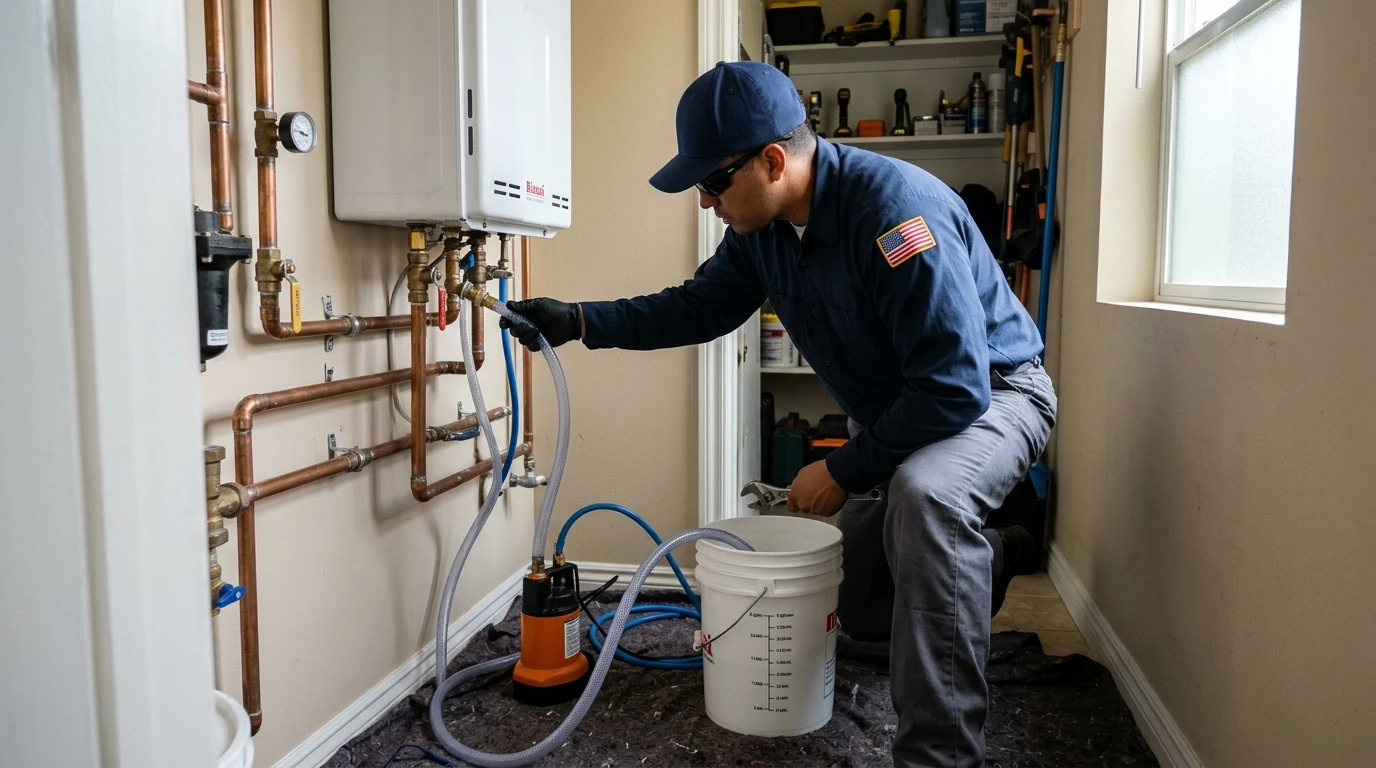
Tankless water heater repair cost depends heavily on whether the unit has been descaled on schedule, because scale buildup on the heat exchanger is the single biggest driver of tankless repair calls in Corona. A flame rod cleaning or igniter replacement is a relatively quick, lower-cost fix. A full descale flush, where a technician circulates a descaling solution through the unit with a pump and hoses, takes longer and costs more, but it’s far cheaper than replacing a heat exchanger that’s scaled solid.
Corona’s hard groundwater is the reason tankless units here need descaling more often than the manufacturer’s generic maintenance schedule assumes. If you’re deciding between a tank and a tankless unit for your next install, or wondering whether your current tankless unit’s maintenance needs match your water supply, our guide on tankless vs. tank water heaters covers that tradeoff directly, and a water softener or filtration system can meaningfully extend the interval between descale services.
What is a service call and diagnostic fee, and why do you pay it?
A service call and diagnostic fee covers the technician’s time to inspect the unit, test the relevant components, and identify the actual failure before any repair work or part is quoted. It is not an add-on charge tacked onto a repair, it’s the cost of an accurate diagnosis instead of a guess.
Many companies apply the diagnostic fee toward the repair cost if you move forward with the recommended fix the same visit. Ask directly whether that applies before the technician starts.
When is a water heater repair not worth it on an older tank?
A repair stops being worth it when the cost of the part and labor starts approaching what a new water heater installation would run, especially on a tank already past 10 to 12 years old. A gas control valve, heating element, or major tankless repair on a unit nearing the end of its expected service life is often money spent extending a tank that’s going to need replacement anyway within a year or two.
The tank itself is the deciding factor, not the part that just failed. If the steel tank is showing rust at a fitting or the anode rod is fully depleted, no replacement part fixes that. Our breakdown on repair vs. replace decisions walks through the signs that point toward replacement, and if you’re not getting hot water at all right now, this guide helps narrow down whether it’s a repairable part or a tank-level failure.
Getting a clear, written diagnosis before any repair happens is the best protection against paying twice, once for a repair and again for a replacement a year later. Call RT Olson Plumbing, Heating and Air Conditioning at (951) 344-5596 to schedule a diagnostic visit, or request a written water heater installation quote if your unit’s age suggests replacement makes more sense than another repair.
About RT Olson Plumbing, Heating and Air Conditioning
RT Olson Plumbing, Heating and Air Conditioning is a licensed plumbing and HVAC contractor (CSLB license #997337, verifiable through the California Contractors State License Board) serving Corona, CA and the surrounding Inland Empire since 2014, with offices in Corona and Anaheim covering Riverside, Orange, and San Bernardino County service areas. The company holds a 4.9 average rating across 628 Google reviews and offers 24/7 availability for plumbing and HVAC calls, including water heater diagnostics and repair.